

Recruitment Software Australia: 7 Picks for 2026
Compare 7 recruitment software Australia options for ICT panels, agencies and small teams with features, pricing, pros and cons.
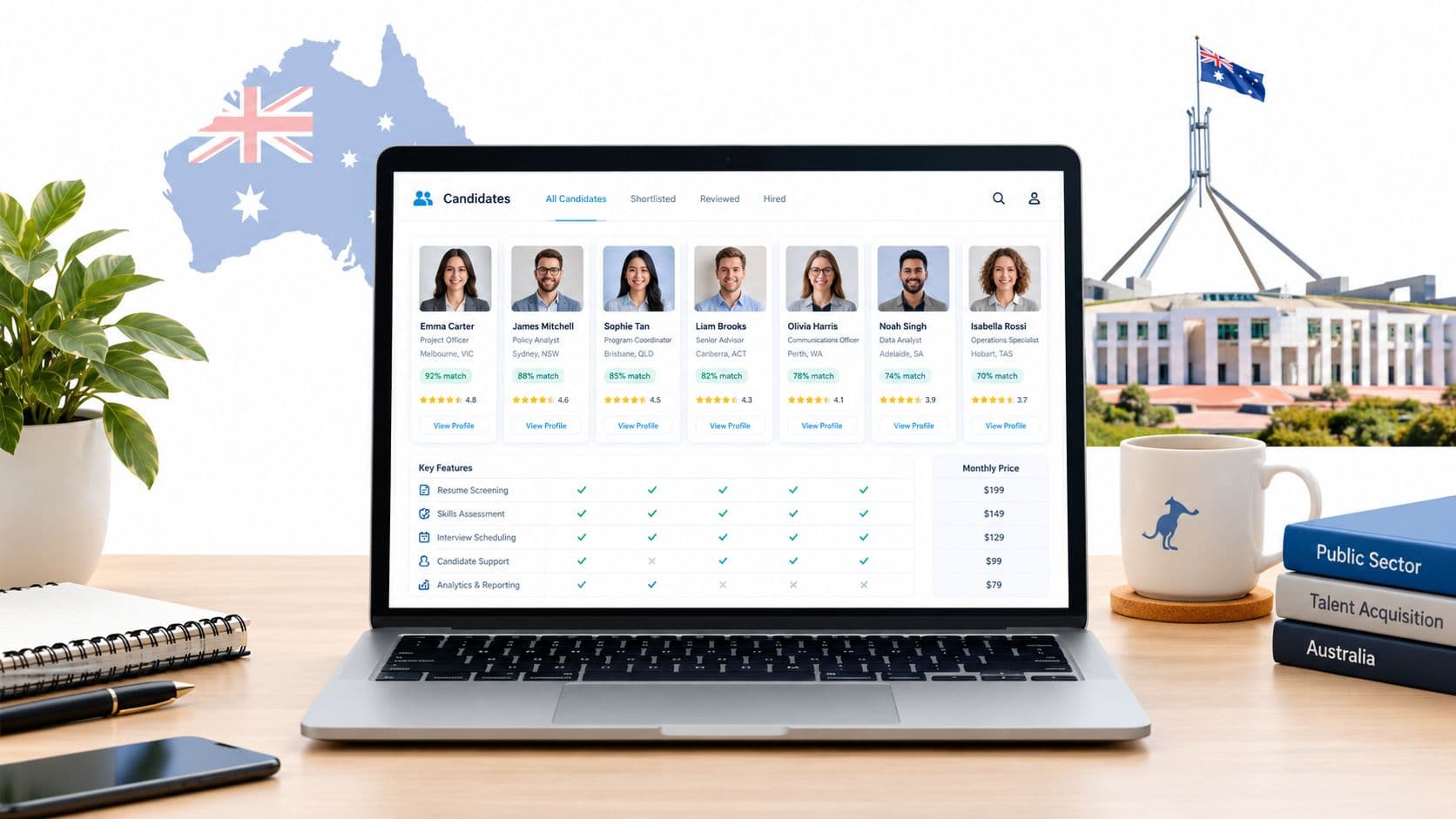
Australian Government procurement panels have channelled more than $22.5 billion through marketplace panels and other whole-of-government arrangements since the program began, according to the Digital Transformation Agency's account of strategic sourcing. That scale does not make government ICT hiring equivalent to a standard job-board search. Labour-hire work can sit behind a BuyICT opportunity, an invitation process, a panel supplier and a role advertisement, each with its own clearance and timing requirements.
Comparing recruitment software in Australia for government ICT means testing whether a tool connects job ads to procurement context, assesses candidate evidence against requirements, and supports compliant submissions. Many ATS and CRM products organise candidates once a vacancy is known. The harder task is establishing which advertisements relate to an opportunity, and how invitation posture, clearance gates and contract-to-ad evidence affect the hiring decision.
This distinction matters to agencies, ICT contractors and small teams recruiting for government software developer, cloud, cybersecurity, data and project roles. More job ads do not necessarily provide better visibility of government demand.
Table of Contents
- 1. eRecruit
- 2. JobAdder
- 3. Bullhorn
- 4. Recruit Wizard
- 5. FastTrack360
- 6. Zoho Recruit
- 7. PageUp
- Top 7 Recruitment Software in Australia: Feature Comparison
- Pick Your Stack for Government ICT Hiring
1. eRecruit
eRecruit is built around the work that general ATS and CRM tools typically begin after an opportunity is already in view. It maps Australian Government ICT procurement opportunities to live job ads from tender-panel agencies, giving recruiters a way to inspect the procurement context alongside the advertised role. Its website snapshot showed 79 open opportunities and 2,734 live ads across 14 labour-hire agencies. Those figures describe the supplied snapshot, not a guaranteed ongoing feed.
The useful distinction is evidence. eRecruit's opportunity records connect contracts and advertisements through role, clearance, location and timing, with direct links to the underlying agency ads. That can help a recruiter judge whether a public ad belongs to the contract being targeted, rather than assuming every government-facing vacancy represents a separate opportunity. The platform also provides automated CV matching with confidence scores and explanations, candidate search, a reusable workspace cache, pipeline kanban, recruiter KPIs and alerts when matches change.
Where it fits, and where it doesn't
A consent gate records candidate representation approval before submission, an important workflow safeguard when recruiters present candidates to panel suppliers. Agency-plan API access supports CRM and reporting integrations. The product is focused on Australian Government ICT procurement, so recruiters hiring across unrelated sectors may still need a broader ATS or CRM as their system of record.
Pros: Evidence-backed contract-to-ad matching; role-level clearance, location and timing; automated discovery and re-scoring; explainable CV matching; pipeline and consent workflow.
Cons: Its specialist focus won't suit every desk. The supplied website content advertised a 7-day free trial, requiring a card, but didn't show specific plan prices. Trial terms and pricing should be checked directly with the vendor.
2. JobAdder
JobAdder is a general-purpose recruitment platform for agency recruiters and in-house talent teams. It combines applicant tracking and recruitment CRM with job-order and candidate management, configurable workflows, reporting and integrations. The vendor describes integrations with more than 200 applications on its website, so teams should confirm that the specific connections they rely on are supported in their chosen setup.
For an Australian Government ICT agency, JobAdder can manage the day-to-day desk: client and candidate records, role progress and recruiter activity. It doesn't provide eRecruit's specialist BuyICT opportunity-to-ad linkage, so a team may need a separate way to establish which procurement opportunity sits behind a panel supplier's advertisement. That's a meaningful boundary, not necessarily a weakness. An ATS can be the system of record without being the source of government demand.
The JobAdder website is the place to confirm current plan scope and integration details. Pricing is quote-based, and API access depends on plan or contract. Teams comparing platforms can also use this guide to understand applicant tracking systems in Australia.
Best fit: Australian recruiters who want one general system for agency or internal hiring operations.
Trade-off: The government-specific contract and panel context may need to be researched and tracked outside the ATS.
3. Bullhorn
Bullhorn is oriented towards staffing and recruitment agencies, with applicant tracking, CV parsing, client management, job posting and a career portal. Higher tiers add custom workflows and marketplace integrations. Its Pro offering includes AI-related search and matching tools alongside analytics, so agencies should test the exact capabilities available in the plan they're considering rather than treating “AI” as a single feature.
For a government ICT recruiter, Bullhorn's core value is organising agency activity across candidates, clients and roles. Its tools can support a busy desk, but the team still needs to verify the procurement context of a public-sector role, including whether it is tied to a BuyICT panel opportunity and what clearance or timing applies. This makes Bullhorn and a specialist opportunity-intelligence product potentially complementary rather than direct substitutes.
Bullhorn's Australian website publishes Australian-dollar pricing for Starter and Core plans. That gives teams an entry point for budgeting, but advanced functions sit in higher or custom-priced tiers. The Australian pricing page doesn't list a free trial.
Procurement test: Ask the vendor to demonstrate a real workflow from role record to candidate submission. Separately confirm how your team will establish the contract, panel supplier, clearance and advertisement linkage.
Bullhorn's breadth may suit agencies building out their recruitment stack over time. The cost and configuration trade-off is whether the additional modules support work the desk performs.
4. Recruit Wizard
Recruit Wizard brings recruitment CRM and ATS functions together, with candidate and client management, automation, reporting and e-signing. Its listed AI-supported tasks include drafting adverts, preparing shortlists, summarising records and generating interview questions. For recruiters handling government ICT roles, these functions can help manage routine desk work, but they don't replace checking a candidate's evidence against role-specific requirements.
The vendor describes itself as Australian-owned and based, and highlights direct support and configurable reporting. It also publishes customer testimonials about migration and customisation. Treat those as vendor-provided accounts, and use a demonstration to establish whether the reporting and setup fit your own processes.
Visit the Recruit Wizard website to discuss pricing, which isn't published on the reviewed page, and the configuration or onboarding involved. A broad feature set can reduce the need to combine separate systems, but only if the team adopts and maintains the workflows. Its general recruitment focus differs from eRecruit's procurement-specific intelligence.
For another comparison of applicant tracking options, see ATS software choices. The practical question is whether your system can carry role-specific evidence into the shortlist and submission stages, not whether it stores CVs.
5. FastTrack360
FastTrack360 is worth considering when government ICT recruitment involves temporary or contract labour and the work continues beyond candidate tracking. Its described capabilities cover candidate and job records, resume parsing, email and SMS communication, portals, timesheets, payroll and billing. Australian payee onboarding includes bank, tax and superannuation details, making the platform relevant to agencies managing contractor operations as well as recruitment.
That operational span can matter after a candidate is placed. But an agency should distinguish the administration of a contractor from the discovery of a government opportunity. FastTrack360's listed recruitment functions don't establish which BuyICT contract sits behind a live panel-agency ad, so recruiters may still need an intelligence source or documented process for that link.
The Access Group's Australian site provides information on FastTrack360. Pricing isn't published in the reviewed material, so discuss implementation, configuration and data migration with the vendor. The platform may be more extensive than a small or permanent-only desk needs.
Best fit: Contract-heavy recruiters who want to connect hiring activity with contractor administration.
Trade-off: Scope and implementation effort need to be weighed against the operational functions the agency will use.
6. Zoho Recruit
Zoho Recruit separates its products for staffing agencies and corporate hiring teams. Listed functions include managing candidates, clients, contacts, interviews and job openings. Paid plans add features such as resume parsing, Boolean search and integrations. A free edition and a 15-day trial allow teams to assess the product, subject to current plan terms and limits.
For a government ICT desk, the key test is whether the configured records capture evidence needed to act on an opportunity. Teams should check how they will document clearance evidence, candidate consent and the procurement relationship for each role. Those controls depend on both workflow design and the selected software edition.
The Zoho Recruit Australia site describes editions and features. Confirm Australian pricing, currency and tax treatment with the vendor, and check that plan limits suit expected use. A broader comparison of recruitment software options can help frame that evaluation. For financial-sector hiring, Visbanking on AI-powered financial recruitment offers a relevant perspective on AI-enabled talent tools.
A low-cost or free ATS can organise a candidate pipeline. It does not establish that a candidate is eligible for a cleared role or connect that role to the correct procurement opportunity.
BuyICT invitation posture and contract-to-ad evidence remain separate checks. Zoho Recruit can provide a configurable starting point, while a specialist intelligence layer such as eRecruit can help teams examine opportunity context. Assess each tool against its own role, rather than expecting an ATS to verify procurement fit.
7. PageUp
PageUp is an Australian-founded talent acquisition platform aimed particularly at organisations with structured or higher-volume employer-side hiring. Its broader suite extends beyond applicant tracking into recruitment marketing, onboarding, analytics and learning. The vendor also describes AI capabilities in its Talent Acquisition Suite, which organisations should assess against their own policy, privacy and review requirements.
This orientation makes PageUp a more natural fit for agencies running formal hiring processes than for a recruitment agency seeking a combined client-and-candidate CRM desk. A government department or large employer can evaluate it alongside existing HR and onboarding systems. A panel-supplier recruitment team should check whether its client management and business development workflow is as important as the employer-side hiring lifecycle before shortlisting it.
The PageUp website describes its talent acquisition suite and wider capabilities. Pricing isn't public in the reviewed material and requires a customised quote. Its breadth may be excessive for a small agency seeking a straightforward ATS and CRM, while its employer-hiring orientation is less aligned with agency desk work than tools such as JobAdder, Bullhorn or Recruit Wizard.
For government ICT hiring, evaluate how the platform fits with your existing HR and onboarding environment, then separately establish how recruiters will manage panel opportunities, contract-to-ad evidence and contractor submissions.
Top 7 Recruitment Software in Australia: Feature Comparison
- Platform — Ideal use case — 🔄 Implementation complexity — Resource requirements — ⭐ Key advantages and 📊 expected outcomes
- erecruit — Australian Government ICT recruiters matching BuyICT contracts to agency job ads — Focused workflow; workspace, matching, pipeline, and consent tools — 7-day card-required trial; pricing not shown; Agency-plan API available — Evidence-linked opportunities, explainable CV matching, alerts, and consent tracking support more targeted sourcing and compliant submissions
- JobAdder — Agency and in-house recruitment teams needing a general-purpose ATS/CRM — Configurable workflows; some automation and API access depend on plan — Quote-based; integrations with 200+ applications, per vendor — Broad job and candidate management and integrations support everyday hiring workflows
- Bullhorn — Staffing agencies seeking an ATS/CRM with room to add capabilities — Tiered platform; advanced tools may require higher or custom tiers — Public AUD pricing for Starter and Core; no trial listed on Australian pricing page — Agency-focused tools, CV parsing, and upgrade options support growing recruitment operations
- Recruit Wizard — Recruitment teams wanting CRM, ATS, reporting, and AI assistance together — Configuration, onboarding, and possible migration effort — Pricing not shown; vendor offers migration and workflow support — Consolidated candidate, client, and workflow tools can reduce reliance on separate systems
- FastTrack360 — Temporary and contract labour-hire agencies managing operational workflows — Potentially extensive; implementation, configuration, and migration scope should be discussed — Pricing not shown; may include timesheet, payroll, and billing functions — Recruitment workflows plus Australian-specific onboarding and optional back-office operations support end-to-end labour hire
- Zoho Recruit — Small or growing agencies and corporate teams seeking scalable recruitment software — Scalable plans; check limits and feature differences before setup — Free edition and 15-day trial; verify Australian pricing, currency, and tax — Trial access and agency/corporate editions support evaluation and gradual scaling
- PageUp — Organisations with structured or higher-volume employer-side hiring — Broader talent-suite scope may require coordination with HR and onboarding systems — Tailored quote; pricing not shown — Recruitment marketing, onboarding, analytics, and ATS capabilities support formal multi-stage hiring
Pick Your Stack for Government ICT Hiring
There isn't one best recruitment platform for every Australian Government ICT workflow. The choice depends on what the team needs to manage: government demand discovery, daily recruitment operations, contractor administration or formal employer-side hiring. The distinction is especially important in a market where a job ad may relate to a procurement contract and where clearance, location and timing can decide whether a candidate is suitable.
For BuyICT panels and contract-to-ad matching, eRecruit is the specialist option in this comparison. It's designed to connect opportunities with live panel-agency ads and give recruiters evidence to review before they act. A general ATS can still be the system of record for candidates, clients and placements, but don't assume it has established the procurement link just because a government-related job title appears in a record.
For daily agency CRM and candidate management, compare JobAdder, Bullhorn and Recruit Wizard against the desk's actual workflow. For contractor payroll and billing operations, include FastTrack360 if those functions sit within the agency's requirements. Zoho Recruit offers a lower-barrier evaluation path, subject to edition limits, while PageUp is more naturally considered by employers with structured hiring and wider talent-lifecycle needs.
A sensible stack pairs one system of record with one source of government ICT demand. Avoid paying for overlapping features until you've tested what recruiters use and where handoffs fail. On live roles, trial the opportunity match, alert, candidate-evidence review and consent workflow. Track whether recruiters accept the matches, how long it takes to move from discovery to shortlist, and where human review changes the outcome. That approach also applies when teams optimize their blockchain hiring workflow, where specialist demand intelligence and a reliable candidate process need to work together.
For a fair comparison, ask each vendor to demonstrate the same role from discovery through submission. Use a government ICT vacancy with a defined technology stack, location, timing and clearance requirement. Then check which tool identifies the demand, which one records evidence, and which one supports the recruiter through candidate review and consent. That's a more useful test than comparing feature labels in isolation.
eRecruit maps Australian Government ICT procurement opportunities to live panel-agency ads, with evidence fields for role, clearance, location and timing. Explore the erecruit platform to review opportunities, assess candidate matches and manage the workflow from discovery to consent-led submission.